Sunday, May 07, 2017

Students try to memorize rather than understand! Who knew! (everyone)


Discrete Math. Required for CS majors, taken mostly by Sophmores.  Goal is to teach them how to think  rigorously. Topics are logic, number theory (not much), induction, sets, functions, relations, combinatorics (includes Pigeon hole prin, henceoforth PNP), prob, countability, uncountability.

We taught the Pigeon Hole Principle and gave MANY examples and HW of the following type:

Let A be a subset of {1,...,50} of size 10. Show there are two subsets of A that have the same sum.

ANSWER: There are 2^{10} = 1024 possible subsets.

MAXSUM is  41+..+50 = (1+...+ 50 )-(1 +...+ 40) = 50*51/2 - 40*41/2 = 455

MINSUM is 0 (the empty set). So the NUMBER OF SUMS is 456

Since 1024 > 456 there are two subsets of A of the same size.

The EXAM covered PHP, combs, prob, and induction. Hence they should know n choose k

On the HW and in class we NEVER did a problem where we only cared about the subsets of a fixed size. Conceptually this is really the same problem but if you had MEMORIZED  the proof template and tried to apply it you would get it wrong.

I asked the following on the exam: which was worth 20 points.

(20 points) Let A be a subset of {1,...,21} of size 8. Show that A has at least two subsets of size 3 which have the same sum.

ANSWER: There are (8 choose 3) = 56 subsets of A of size 3.
MAXSUM = 19+20+21 = 60, MINSUM = 1+2+ 3 = 6,
 So the NUMBER OF SUMS is 60-5 = 55.

Since 56> 55 there are two subsets of A of size 3 that have the same size.

Grading rubric:

If they got (8 choose 3) thats 3 points.(Many said 2^8- I suspect incorrect memorization)

If they got the MAXSUM and the MINSUM both right (aritj errors- NO penalty) then 3 points
(Many had MINSUM=0- I suspect incorrect memorization).

If they knew to use these PHP then 3 points.

If they got all three right then 20 points

So they got 0,3,6, or 20.

Here is the final tally:

0 points: 85

3 points: 190

6 points: 71

20 points: 167

(For the entire exam: 39 100's, 55 90-99, 77 80-89, 77 70-79, 76 60-69, 70 50-59, 47 40-49, 24 30-39, 24 30-39, 17 20-29, 3 10-19, 3 1-9)

This all raises the much harder question- how can we get students to UNDERSTAND rather than MEMORIZE

Telling them: DO NOT MEMORIZE! TRY TO UNDERSTAND!- I did this. Oh well.

Allowing a cheat sheet (which I did) is both good and bad for this issue.

Giving them a much wider variety of problems of this type. Either they would understand OR they would memorize several different templates.

I WELCOME your thoughts on either my grading or on how to get them to try to UNDERSTAND rather than MEMORIZE.


Thursday, May 04, 2017

Summer Conferences

Ahh summer. No Classes. Baseball. Opera Festivals. Time to focus on research and starting a new book. But, of course, many computer scientists travel the world to various conferences. I went to too many last year and trying to cut down but many great options abound.

The STOC 2017 Theory Fest, June 19-23 in Montreal, five days of conference talks, tutorials, invited lectures and so much more. Sanjeev Arora has the details over at Windows on Theory.

The ACM celebrates 50 years of Turing Awards with a special conference June 23-24 in San Francisco. Tim Berners-Lee takes home this year's prize.

The Computational Complexity Conference, that meeting that shares its domain with this blog, holds its annual get together July 6-9 for the first time in Latvia. Latvia gave us Juris Hartmanis, one of the founders of the field. Travel grants available for students and "needy researchers", you don't have to be an author to apply.

Computability in Europe, June 12-16 in Turku, Finland. Economics and Computation, June 26-30 at MIT. Computational Geometry, July 4-7 in Brisbane. ICALP, July 10-14 in Warsaw. Random/Approx, August 16-18 in Berkeley.

If I missed your favorite events, well that's why we have comments.

Monday, May 01, 2017

A Celebration of Computer Science at Harvard in Honor of Harry Lewis's 70th Bday

My adviser Harry Lewis turned 70 recently. I blogged about how things have changed since I got my Phd in this post. I now post on

A celebration of Computer Science at Harvard in Honor of Harry Lewis's 70th Birthday

(for video of all talks in order see: here)

The title was accurate: most of the speakers (1) were Harvard ugrads, (2) went on to do great things, and (3) Harry Lewis had inspired them. The talks were mostly non-technical and fun!
went on to do great things. Margo Seltzer, a prof at Harvard now (who I TAed many years ago in Aut Theory) orgnaized the event, though she gave lots of credit to her helpers.

0) Marty Chavez was one of Harry Lewis's teaching assistants for a CS programming course and recalled Harry's harsh (but fair) grading polices on code which he later saw the wisdom of.

1) Marty Chavez never thought he would use that HALT is undecidable (I think I might have been his TA for that course). But he found himself telling an egghead of economists who wanted to VERIFY all code to avoid future crashes that... Can't be done. Actually, while that is true, attempts to verify some of it might be a good idea.

2) James Gwertzman noted that:

in 1991 10% of all ugrads at Harvard  had email, and there was no web

in 1995 100%of all ugrads at Harvard had email, and there was web (though primitive).


He then pointed out that a company can do very well by using LOTS of packages that are already out there to use. He named #slack, salesforce, trello, jeaking, mailchip, greenhouse, phabricator, pingdom (just deals with pings- really!), datadog, strips, statuspage, zendeski.

The future will be serverless and codeless.

4) Guy Steele gave the most technical talk and it was, as the kids say, awesome (do adults still say `as the kids say' ?) Here is a version of the talk:

A Logial Concern

Its about how papers at POPL and some other conference have been informally using a language to specify protocols and by now its all bent out of shape. There is also some nice history of math embedded in the talk of which I'll say one thing: one way to group terms together is by placing a bar over them. The most common use of this now is the squareroot sign which didn't always have that bar over the quantity.

Guy's talk even had some slides about his notebooks from Harvard, from a course Harry taughtback in 1974 (the first course Harry taught at Harvard). Part of the course was on the sequent calculus which relates to Guys work and the current paper. Guy's notebook had both material relevent to the current paper and doodles of things like a picture of a Church next to Church's thesis.

The paper was very labor intensive since you can't just use a search program to search for some of the notations he was talking about. For example overbar and underbar. So he had to go through ALL of the POPL proceedings (and a few others) by hand. In 2017. Will that ever be easier?

He also had a two quotes about proofs:

Its not enough to prove something. You must seduce people into believing it

One man's truth is another man's cold broccoli 

I leave it to you to figure out who these quotes are credited to (different people).

5) Stuart Shieber's talk was WWHD (What Would Harry Do).

Care

Promote Character over knowledge (see Harry's book Excellence without a soul- How a great university forgot education)

Pursue the right over the popular

A late talk by Rebecca Nessin told of some things Harry did as Dean that were RIGHT but NOT POPULAR:

The housing at Harvard used to be you chose the house (dorm complex) you lived in. When I was there Dunster was KNOWN to be the Math-house, and others had other reputations that were somewhat accurate. Harry made housing RANDOMIZED (did he use a hardness result to derive a pseudo random generation?) His goal was to increase diversity- people should get to know other kinds of people that are not like themselves.

He made polices do curb underage drinking.

He raised standards for when students get WARNINGS about their performance in classes.

These were all unpopular BUT the right thing to do.

6) There was a panel discussion on teaching.  I'll save this for a later blog post since my random thoughts on this may make this post longer than it should be. I WILL say it was excellent.

7) Rebecca Nessin is the head online course development at Harvard. The courses are  (1) open enrollment  (2) No faculty- all are borrowed from the usual faculty, (3) some courses are online.  She developed a course where the students ARE avatars. Helps with shy students. And text based conversation allows students to get out coherent complete thoughts (CONTRAST- I find myself saying to my students questions ``that was a random sequence of math words'')

That was the first part of her talk.

THEN she began talking about her journey through Harvard and Harry's place in it. Unlike her fellow students she did not what she wanted to do. She took random courses (ancient greek! Multivar calc!) After graduating she still did not know what she wanted to do so she went to... Harvard Law School. While there she took a CS course (what!  You can do that?) and soon after had Aut Theory with Harry. Her PhD was with Stuart Shieber with Harry on the committee and lots of Grammars in it.

Then she told a great story: There was a discussion of raising the min age that someone can get an ugrad  degree at the Harvard extension school. Harry asked who this would affect. The answer was

A small number. Students who can't go to a residential full time school for some reason. This includes competitive athletes, performance artists, deployed military personal, youthful entrepreneurs,  and people with disabilities.

to  which Harry replied:

These are the oddballs. Are we trying to say there is no room for oddballs at Harvard?

Rebecca ended her talk by pointing out that with her crooked path to where she is now she is an oddball and
that all of the oddballs should celebrate that they will also have a place at at Harry Lewis's Harvard.

8) Cliff Young declared Moore's Law Dead (some disagree- see here) - and the solution is to go back to special purpose machines- which, contrary to popular belief, Do NOT just do one thing and
ARE programmable, He also talked about Amdahl's law which is about the limits of parallelism and about how  parallelism research seems to fight the same battle over and over again (RISC vs CISC,
SIMD vs MIMD, and VLIW)

9) Danielle Feinberg from Pixar had the following quote about animation:

Long hair is an unsolved problem

But they did solve it (for the movie The Incredibles). She also pointed out that they can sometimes spend lots of time and energy and creativity on a scene that will take 3 second, or on something just in the background.

Much like Rebecca, Danielle also appreciated Harrys appreciating for oddballs.

10) Harry Lewis- He spoke some about his career but also about CS in general.

 His career and where his now is sort-of an accident. He was originally going to get his PhD in Systems but Theorists got out faster.

 Computer Science has changed a lot in the last X years- but the change he remarked on the most is that it CS is at

The twilight of the Amateur Era

I'll let you debate what that means.

11) Later at the reception Bill Gates and Mark Zuckerberg send their recorded greetings, though only Mark Z's is on the you tube video- towards the end. Its short so rather than summarize it- I urge to to view it yourself.


Thursday, April 27, 2017

So Was I

While Bill marched at the main March for Science in DC, I marched at the satellite march in Atlanta, my daughter Molly in Chicago, Scott Aaronson in Austin, Hal Gabow in New York, and Donald Knuth (pictured) presumably in San Francisco. I thank the many of you who participated in your local march. Science appreciates the support.

Most of the marchers I saw did not come from the ranks of academia or professional scientists. Rather people from all walks of life who believe in the important role science and scientists have in shaping our future. Parents dragged their kids. Kids dragged their parents.

There have been some worry about politicizing science and whether the march would be a bad idea. The march won't have much effect on policy positively or negatively. But we mustn't forget that scientists need to deal with politics, as long as the government continues its missions of funding science and using proper science to help guide policies that require understanding of the world.

If there's one positive sign of a Trump presidency, as Molly explained to me, it's inspiring a generation. We would not have had a March for Science if Trump wasn't president, but what an wonderful movement and we should march every year around Earth Day no matter who sits in the oval office.

Monday, April 24, 2017

I was at the March for Science on Saturday

(Will blog on Harry Lewis's 70th Bday next week-- Today's post is more time sensitive.)

I was on the March for Science on April 22. Here are some Kolmogorov random comments

1) Why should I go to it? One less person there would not have matters. AH- but if they all think that then nobody goes. The Classic Voting Paradox- why vote if the chance that your vote matters is so small (even less so in my state- Maryland is one of the Bluest States).  In the case of the March For Science there is another factor- since I live in Maryland I really CAN go at minimal effort. Most of the readers of this blog cannot (Though there were some other marches in other cities. Scott was at a March in Austin Texas.)

2) One of the speakers said something like `and the fact that you are all here in the rain shows how much you believe in our cause!'  While the rain might have made our being there more impressive, I wish it had been better weather.

3) Here are some of the Signs I saw:

What do we Want!
Empirical  Based Science!
When do we Want it!
After Peer Review!

Trump- where's your PhD? Trump University?
(This one is not fair- most presidents have not been scientists and have funded science. Trump himself not have a PhD  is not relevant here.)

A sign had in a circle:  pi, sqrt(2) and Trump and said: These are all irrational.

A 6-year old had a sign: Light travels faster than sound which is why Trump looks bright until he talks (I think her mother, who was there, made it for her).

Science is the Solution (with a picture of a chemical Flask)

If you are not part of the solution you are part of the precipitate

Truth is sometimes inconvenient.

So severe even the nerds are here

I can't believe I'm marching for facts!

There is no planet B (this refers to if Global Warming kills the planet we can't go elsewhere- a play off of `Plan B')

I'm with her (pointing to the earth) (The person with this sign told me she used the same sign for the Women's  March- so recycling!)

Science has no borders

Science doesn't care what you think.

Its not Rocket Science- well, some of it is.

4) The March For Science was the same day as Earth Day and many of the talks mentioned global warming and pollution. Many of the talks mentioned the contributions of women and minorities. One of the speakers was transgender .Hence the March had a liberal slant. BUT- if believing in Global Warming and wanting to open science up to all people (e.g., women and minorities) are Liberal positions, this speaks very badly of conservatives. First ACCEPT that Global Warming is TRUE- then one can debate what to do about it--and that debate could be a constructive political debate.  One talk was about Indigenous Science-- I can't tell if its a healthy alternative  view or ... not.

A more telling point about the march having a liberal slant is the OMISSION of the following topics:

Technology has

(a) helped Oil people extract more oil, and fracking to be cost effective

(b) GMO's  have helped feed the world and have had no ill effects (I think anti-GMO in America is a fringe view-- I don't know of any elected democrat who is anti-GMO, though I could be wrong. I think its a more mainstream view in Europe.)

(c)  make the weapons that keep us safe (that's a positive spin on it)

(d) DNA used to prove people GUILTY (they did mention DNA used to prove people INNOCENT).

So the March LOOKED like it was a bunch of Liberal Scientists. Does this make it less effective and easy for Trump and others to dismiss? Or are we so far past any hope of intelligent conversation that it doesn't matter?


5) Many of the machers, including Darling and me,  had lunch at the Ronald Reagan Center. Is this an IRONY?

NO: Reagan funded the NSF as well as other presidents, see this blog post of Lance's from 2004. That post is interesting for other reasons: at the time Dems and Reps seemed to both RESPECT science. Trump may be the first one not to- though its early in his term so we'll see how it all pans out. Second, Lance has been blogging for a LONG time! (since 2003, and me since 2007).

YES: See these quotes by the Gipper (ask your grandparents why Reagan is called that):here

6) Will it have any effect? Short term I doubt it, Long term probably yes. An article about the impact of the the Women's March: here

7) There have been Women's Marches, The Million Man March, Civil Rights Marchs, pro-life, pro-choice, anti-war, pro-gay, anti-gay marches before. Has there ever been a March for Science before? Has there ever been a need before? I don't think so but I am asking non-rhetorically.

Cutting EPA because you don't believe in Global warming is appalling, (see here) but I understand politically where that comes from.

Not allowing funding of gun violence because you are pro-gun is appalling, (see here) but I understand politically where that comes from.

IF they cut funding on the study of evolution (Have republican presidents done that?) then that would be appalling but I would understand politically where it came from.

But cutting the NIH (see here) or the NSF (has he done that yet or is he just thinking of doing that?) I really DON"T understand- It does not even fit into the Republican Philosophy.

There should NOT be a NEED for a MARCH FOR SCIENCE, Or, to quote one of the signs

I can't believe I"m marching for facts!


Thursday, April 20, 2017

Will talk about Harry Lewis 70th bday conference later but for now- that was then/this is now

On Wed April 19 I was at the Harry Lewis 70th birthday celebration!
I will blog on that later.

Harry Lewis was my thesis adviser. Odd to use the past tense- I DID finish my thesis with him
and so he IS my adviser? Anyway, I will do a blog about the celebration next week.

This week I ponder- what was different then and now (I got my PhD in 1985).

False predictions that I made in 1985:

1) CS depts all have different views of what a CS major should know. By the year 2017 they will have figured out EVERY CS MAJOR SHOULD KNOW XXX and I will still write questions for the CS GRE. DID NOT HAPPEN. And a MINOR source of income for me has been cut off.

2) CS will be about 45% or more female. After all, the old guard is dying, its a new field without a tradition of sexism (this may have been false even then). Actually Women in CS has DECLINED since 1985. I'm still surprised since people in computing tend to be progressive. One could do several blog posts on this, but lacking the expertise I won't. (Gee bill- since when has lacking expertise stopped you before :-)

3) There will be some progress on P vs NP. Maybe an n^2 lower bound on SAT. Saying we've made NO progress is perhaps pessimistic, but we haven't made much.

4) in 2017 when Jet Blue emails me `CLICK HERE TO PRINT YOUR BOARDING PASS' the previous night then it will always work, and if it doesn't then I can call them and after 9 minutes on hold (not too bad) be able to fix the problem. They were not able to, though at the airport they fixed it and got me onto the plane fast as compensation.

OTHER CHANGES

1) Theory was more centralized. STOC and FOCS were the only prestige conferences, and everyone went to them.

2) A grad student could get a PhD and only have 2 papers published and get a Tenure Track Job.

3) One could learn all that was known in complexity theory in about two years.

4) You didn't have to do ugrad research to get into grad school (I don't think you HAVE TO now either, but many more do it so I PREDICT in the future you'll have to. Though my other predictions were not correct so .... there's that)

5) Complexity was more based in Logic then Combinatorics.

6) Complexity theory was easier! Gee, when did it get so hard and use so much hard math!

7) It seemed feasible that P vs NP would be solved within twenty years. I've heard it said that the Graph Minor Theorem was when P lost its innocence- there were now problems in P that used VERY HARD math--- techniques that were hard to pin down and hence hard to show would not work.

8) The number of complexity classes was reasonable. (I don't count Sigma_i as an infinite number of classes)

9) Grad students were just beginning to NOT learn the Blum Speed Up Theorem. It would take a while before they began to NOT learn finite injury priority arguments in recursion theory. OH- speaking of which...

10) Computability theory was called recursion theory.

11) Some schools had this odd idea that in FRESHMAN programming one should teach proofs of program correctness.

12) Some schools (SUNY Stonybrook and Harvard were among them) did not have a discrete math course. Hence the course in automata theory spend some of its time teaching how to prove things. (Both schools now have such a course. For Maryland I don't recall- either it didn't have one and I invented it OR it did have one and I revamped it.)

13) No Web. You had to go to a library to copy papers on a copier (Ask your grandparents what a copier is)

14) Copying cost far less than printing.

15) Someone who looked good on paper for MATH but had no real CS background could get into Harvard Applied science department for grad school and get a degree in ... speaking of which

16) In 1980 Harvard did not have a CS dept. So my Masters degree is formally in Applied Math, though I don't recall solving partial diff equations or other things that one associates with applied math. Sometime when I was there CS became officially something so I got my PhD in CS. (My students are surprised to hear this-- they think I got my PhD in Math.)

17) Harry Lewis had a moustache and smoked a pipe.  He has shaved off one and gave up the other.

SO, what to make of this list? ONE THING- I DO NOT `yearn for the good old days' That was then, this is now. I am GLAD about everything on the list EXCEPT two area where NOT ENOUGH change has happened- (a) I wish there was more diversity in CS, and (b) I wish Jet Blue had better software for boarding passes.


Monday, April 17, 2017

Understanding Machine Learning

Today Georgia Tech had the launch event for our new Machine Learning Center. A panel discussion talked about different challenges in machine learning across the whole university but one common theme emerged: Many machine learning algorithms seem to work very well but we don't know why. If you look at a neural net (basically a weighted circuit of threshold gates) trained for say voice recognition, it's very hard to understand why it makes the choices it makes. Obfuscation at its finest.

Why should we care? A few reasons:

  • Trust: How do we know that the neural net is acting correctly? Beyond checking input/output pairs we can't do any other analysis. Different applications have a different level of trust. It's okay if Netflix makes a bad movie recommendation, but if a self-driving car makes a mistake...
  • Fairness: Many examples abound of algorithms trained on data will learn intended or unintended biases in that data. If you don't understand the program how do figure out the biases?
  • Security: If you use machine learning to monitor systems for security, you won't know what exploits still might exist, especially if your adversary is being adaptive. If you can understand the code you could spot and fix security leaks. Of course if the adversary had the code, they might find exploits. 
  • Cause and Effect: Right now at best you can check that a machine learning algorithm only correlates with the kind of output you desire. Understanding the code might help us understan the causality in the data, leading to better science and medicine. 
What if P = NP? Would that help. Actually it would makes things worse. If you had a quick algorithm for NP-complete problems, you could use it to find the smallest possible circuit for say matching or traveling salesman but you would have no clue why that circuit works. 

Sometimes I feel we put to much pressure on the machines. When we deal with humans, for example when we hire people, we have to trust them, assume they are fair, play by the rules without at all understanding their internal thinking mechanisms. And we're a long way from figuring out cause and effect in people.

Thursday, April 13, 2017

Alice and Bob and Pat and Vanna

"The only useful thing computer science has given us is Alice and Bob" - A physicist at a 1999 quantum computing workshop
Alice and Bob, great holders of secrets, seemed to pop into every cryptography talk and now you see them referenced anytime you have two parties who have something to share. Someone at Dagstuhl a few weeks back asked who first used Alice and Bob. What a great idea for a blog post, and I decided to do some binary searching through research papers to find that elusive first Alice and Bob paper. Turns out Wikipedia beat me to it, giving credit to Rivest, Shamir and Adleman in their paper A method for obtaining digital signatures and public-key cryptosystems, the paper that won them the Turing Award.

In grad school attending a square dance convention we ran into a married couple Alice and Bob and they couldn't figure out why we were laughing. Yes, I square danced in grad school, get over it.

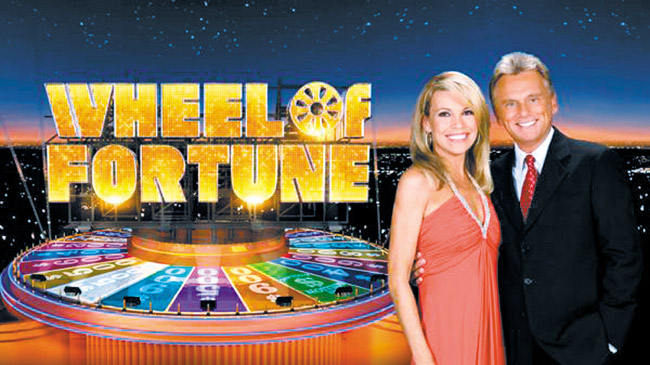
The Wikipedia page lists a number of other common names used in protocols including perennial third wheel Charlie and nosy eavesdropper Eve. I can claim credit for two of those names, Pat and Vanna. In my first conference talk in 1987 I had to explain interactive proofs and for the prover and verifier I picked Pat and Vanna after the hosts, Pat Sajak and Vanna White, of the popular game show Wheel of Fortune. Vanna didn't trust Pat and spun the wheel to get random questions to challenge him. Half of the audience laughed hysterically, the other half had no clue what I was talking about. I heard the FOCS PC took a break by watching an episode of Wheel of Fortune to understand the joke.

Howard Karloff insisted we use Pat and Vanna in the LFKN paper. Pat and Vanna have since retired from interactive proving but thirty years later they still host Wheel of Fortune.

Monday, April 10, 2017

What is William Rowan Hamilton know for- for us? for everyone else?

I found the song William Rowan Hamilton that I used in my April fools day post because I was working on a song about Hamiltonian Circuits to the tune of Alexander Hamilton

Circuit Hamiltonian

I want a Circuit Hamiltonian

And I'm run-ing a pro-GRAM for it

So  I wait, so I wait

(Darling said: Don't quit your day job.)

I noticed that William Rowan Hamilton had the same cadence as Alexander Hamilton so I assumed that someone must have used that for a parody, and I was right

But

Listen to the son. They mention the following::

Kinetics, Quaternions (This is mentioned the most), An optimization view of light,  Minimal action,
`your energy function generates the flow of time' ,Operators that Lie Commute with the symbol that bears your name, His versors(?) formed hyperspheres - see if you can plot 'em- invented vectors and scalars for when you dot 'em (Did he really invent vectors? Wikipedia says that in a sense he invented cross and dot products.) And Schrodinger sings that he adapted Hamilton's work for Quantum (I didn't know Schrodinger could sing!).

What do they NOT mention: Hamiltonian paths or circuits. His Wikipedia page does mention Hamiltonian circuits, but not much and you would have no idea they were important.

When a computer science theorists hears `Hamiltonian' she prob thinks `path' or `circuit' and not `an optimization view of light' or anything else in physics'  She might think of Quaternions and if she does Quantum Computing she may very well think of some of the items above. But these are exception. She would likely think of the graph problems.

The rest of the world would think of the list above (or would think William Rowan Hamilton died in a dual over Quaternions and later had the best Hamilton Satire written about him- the second of course being the one about Batman,)

In his own time he was best know for Physics. Maybe also  quaternions. I think Hamilton himself would be surprised that this problem became important. So here is my question:

When did the problem become important? Before NP-Completness or after?

Is he still better known for his physics and quats- I think yes.

When I say `Hamilton' what comes to YOUR mind?


Thursday, April 06, 2017

A Bridge Too Far


In Atlanta last week a fire destroyed a major highway bridge right on my, and so many other's, commutes. I've been playing with different strategies, like coming in later or even working at home when I can, not so easy when a department chair. I expect at Georgia Tech, just South of the damaged highway, we'll see less people around for the next ten weeks or so.

Even before the bridge collapse faculty don't all come in every day. In the Chronicle last month Deborah Fitzgerald laments the empty hallways she sees in her department. Hallways became a victim of technology, particularly the Internet. We mostly communicate electronically, can access our files and academic papers on our laptops and iPads just as easily in a coffeehouse as in our office. If you use your mobile phone as your primary number the person calling you won't even know if you are in the office. The only reason to come into the office is to teach or to meet other people.

Of course meeting other people is a very good reason. Not only scheduled meeting with students but the random meeting with another colleague that turns into a research project. The times I've walked into a student's office with a crazy idea, or needed a combinatorial theorem from one of the local experts. As we even move our meetings to video conferences, we really start to lose those spontaneous connections that come from random conversations. Soon the technology may get so good that our online meetings and courses will become a better experience than meeting in person. What will happen to the universities then?

Tuesday, April 04, 2017

Proving Langs not Regular using Comm Complexity


(My notes on this are at my course website: here They are notes for my ugrad students so they may be longer and more detailed than you want.)

While Teaching Regular langauges in the Formal Languages course I realized

Using that  { (x,y) : x=y, both of length n}  has Communication Complexity \ge n+1 one can easily prove: 

a) The Language \{ xx : x\in \Sigma^*} is NOT regular

b) For all n the language \{ xx : x \in \Sigma^n }, which is regular, requires a DFA on 2^{n+1} states.

I also used Comm Complexity to show that

{ w : the number of a's in w is a square}  is not regular, from which one can get

{ a^{n^2} : n\in N} is not regular.

More generally, if A is any set such that there are arb large gaps in A, the set

{ w : the number of a's in w is in A} and {a^n : n \in A} are not regular.

This approach HAS TO BE KNOWN and in fact it IS- Ian Glaister and Jeffrey Shallit had a paper in 1996 that gave lower bounds on the size of NFA's using ideas from Comm Complexity (see here). They present  their technique as a way to get  lower bounds on the size of NFA's; however, their techniques  can easily be adapted to get all of the results I have, with similar proofs to what I have.
(Jeffrey Shallit, in the comments,  pointed me to an article that predates him that had similar ideas:here.)
(Added later- another early  referene on applying comm comp to proving langs not regular is Communication Complexity. Advances in Computers Vol 44 Pages 331-360 (1997),
section 3.1, by Eyal Kushlevitz. (See here)

Next time you teach Automata theory you may want to teach showing langs are NOT regular using Comm Complexity. Its a nice technique that also leads to lower bounds on the number of states for DFA's and NFA's. 


Saturday, April 01, 2017

William Rowan Hamilton- The Musical!


With the success of Hamilton,the musical on broadway (for all of the songs and the lyrics to them see here- I wonder who would buy the CD since its here for free)  Lin-Manuel Miranda looked around for other famous figures he could make a musical about. Per chance I know Lin's college roommates father and I suggested to him, more as a joke, that Lin-Manuel could make a musical about

William Rowan Hamilton

Well, Lin-Manuel heard about this and noticed that

William Rowan Hamilton

has the exact same number of syllabus as

Alexander Hamilton.

Hence some of the songs would be able to have the same cadence.  He has gone ahead with the project! He has asked that I beta test the first song by posting it, so I will:

William Rowan Hamilton

Lin-Manuel will be reading the comments to this blog- so please leave constructive comments about the song and the idea.


Tuesday, March 28, 2017

Parity Games in Quasipolynomial Time

In one of the hallway discussions of last week's Dagstuhl I learned about an upcoming STOC paper Deciding Parity Games in Quasipolynomial Time by Cristian Calude, Sanjay Jain, Bakhadyr Khoussainov, Wei Li and Frank Stephan. Hugo Gimbert and Rasmus Ibsen-Jensen offer a simplified proof of the correctness of the algorithm.

A Parity Game works as follows: An instance is a finite directed graph where every vertex has at least one outgoing edge, integer weights on the vertices and a designated starting vertex. Alice and Bob take turns choosing the next vertex by following an edge from the current vertex. They play this game infinitely long and Alice wins if the the largest weight seen infinitely often is even. Not trivial to show but the game is determined and memoryless, no matter the graph some player has a winning strategy, and that strategy depends only the current vertex and not the history so far. That puts the problem into NP∩co-NP and unlikely to be NP-complete.

Like graph isomorphism, whether there exists a polynomial-time algorithm to determine the winner of a parity game remains open. Also like graph isomorphism we now have a quasipolynomial-time (exponential in logk) algorithm, an exponential improvement. Parity games have some applications to verification and model checking and some at Dagstuhl claim the problem is more important than graph isomorphism.

One difference: If you had to guess who would make the big breakthrough in graph isomorphism, László Babai would be at the top of your list. But many of the authors of this new parity games paper, like Frank Stephan and Sanjay Jain, focus mostly on computability and rarely worry about time bounds. Their algorithm does have the flavor of a priority argument often found in computability theory results. A nice crossover paper.

Thursday, March 23, 2017

The Dagstuhl Family

This week I'm at the Dagstuhl workshop on Computational Complexity of Discrete Problems. As you long time readers know Dagstuhl is a German center that hosts weekly computer science workshops. I've been coming to Dagstuhl for some 25 years now but for the first time brought my family, my wife Marcy and daughter Molly, so they can see where I have spent more than half a year total of my life. Molly, currently a freshman at the University of Chicago, was the only Chicago representative, though the attendees included four Chicago PhDs, a former postdoc and a former professor.

We had a different ice breaker, where each person wrote topics they think about which ended up looking look like an interesting bipartite graph.


Molly has a few thoughts on Dagstuhl:

The coolest thing about the study of computer science is this place.

Okay, I know my dad would disagree with me (he probably thinks the coolest thing about computer science is the computer science itself). But for me, someone quite removed from the math and science and thinking, this place is by far the coolest thing about the computer science community. The point of it is isolation, as well simultaneous connection. The isolation comes in the form of a meeting center in rural Germany, separated from the world, devices which can (and do) block wifi in rooms like lecture rooms and the dining hall, resulting in a week without much interaction with the outside world. The connection stems from this very isolation -- in this highly isolated place, people are forced to connect with each other face-to-face, and to get to know each other, as well as the ideas and problems people are working on. The isolation creates a heightened sense of community, both in social and intellectual senses of the word. Forced to be so close and so interconnected, it’s no wonder so many problems get solved here.

I’m glad I got to come see why my father has been coming here for a quarter century. He is very old.

Sunday, March 19, 2017

If you want to help your bad students DO NOT give an easy exam


1) When I was a grad student TAing Formal Lang Theory we had a final ready to give out but noticed that one problem was too hard. So we changed it. But we made it too easy. Whoops. My thought at the time was this will help the bad students. I was wrong. Roughly speaking the students who got 70-80 on the midterm now got 90-100 on the final whereas the students who got 30-40 on the midterm got 35-45 on the final. So the bad students improved, but the better students improved more.

2) When I teach Discrete Math to LOTS of students we have a policy about midterm regrade requests. Rather than have them argue in person they have to:

In writing make a clear concise argument as to why it was mis-graded

If your argument displays that you really don't know the material, even when you can reflect on it, you can lose points. (True Story: We ask for an example of a Boolean Function with two satisfying assignments. They gave us a formula with only one, so they got -5. In the regrade request they try to still argue that it has two satisfying assignments. They lost 2 more points.)

In reality the policy is more preventative and we rarely remove points. However even this policy benefits the better students more than the poor ones who have a hard time even articulating why what they wrote is actually right (likely it is not).

3) Just this winter teaching a 3-week 1-credit course we were grading a problem and giving lots of 15/25 since the students were all making the same mistake. Half way through I got suspicious that maybe WE were incorrect. Looking at the exact wording of the question I realized WE were wrong, and, given the wording and what they would quite reasonably think we wanted, they were right. So we went back and upgraded many students from 15 to 25. And again, this lifted students in the 70's to 90's, but did NOTHING for the students below 50 since none of them had anything like a correct answer to any way to view the question.

Okay, so what does all of this mean?  It means that an easy exam or a generous grading policy is devastating for the bad students.

However, that's just my experience- what are your experiences with this?


Thursday, March 16, 2017

NP in ZPP implies PH in ZPP

If NP is in ZPP is the entire polynomial-time hierarchy in ZPP? I saw this result used in an old TCS Stackexchange post but I couldn't find a proof (comment if you know a reference). The proof that NP in BPP implies PH in BPP is harder than it looks and NP in BQP implies PH is in BQP is still open as far as I know.

I found a simple proof that NP in ZPP implies PH in ZPP and then an even simpler one.

Assume NP in ZPP. This implies NP in BPP so PH is also in BPP. So we need only show BPP in ZPP.

BPP is in ZPPNP follows directly by Lautemann's proof that BPP is in Σ2P or by the fact that BPP is in MA is in S2P is in ZPPNP. By assumption, BPP in ZPPNP implies BPP in ZPPZPP = ZPP.

And this is even simpler.

ZPP = RP∩co-RP in NP∩co-NP. Σ2P = NPNP in NPZPP (by assumption) in NPNP∩co-NP = NP in ZPP. You can get the higher levels of the hierarchy by an easy induction.

Monday, March 13, 2017

Other fields of math don't prove barrier results- why do we?

Before FLT was solved did some people prove theorems like:

FLT cannot be proven using techniques BLAH. This is important since all current proofs use BLAH.

I do not believe so.

Replace FLT with Goldbach's conjectures or others and I do not believe there were ever such papers.

I have sometimes seen a passing reference like `the techniques of this paper cannot get past BLAH but it was not dwelled on. The most striking example of this (and what got me to right this post) was the
Erdos Distance Problem (see here)--- when the result Omega( n^{ (48-14e)/(55-16e) - epsilon}) was shown I heard it said that this was as far as current techniques could push it. And then 11 years later the result Omega(n/log n) was proven. I asked around and  YES the new paper DID use new techniques. But there was not the same kind of excitement I here when someone in TCS uses new techniques (e.g., IP=PSPACE used techniques that did not relativize!!!!!!!!)


With P vs NP and other results we in TCS DO prove theorems and have papers like that. I am NOT being critical-- I am curious WHY we do this and other fields don't. Some options

1) Bill is WRONG- other fields DO do this- see BLAH. Actually proof theory, and both the recursive math program and the reverse math program DID look into `does this theorem require this technique' but this was done for theorems that were already proven.

2) Bill is WRONG- we are not that obsessed with barrier results.

3) P vs NP is SO HARD that we are forced into considering why its hard. By contrast there has been progress on FLT and Goldbach over time. Rather than ponder that they NEED new techniques  they went out and FOUND new techniques. Our inability to do that with P vs NP might be because it's a harder problem- though we'll know more about that once its solved (in the year 3000).

4) P vs NP is closer to logic so the notion of seeing techniques as an object worth studying is more natural to them.

What do you think?

Thursday, March 09, 2017

The Beauty of Computation

Lisa Randall wrote a New York Times book review of Carlo Rovelli's Reality Is Not What It Seems with some interesting responses. I want to focus on a single sentence from Randall's review.
The beauty of physics lies in its precise statements, and that is what is essential to convey.
I can't speak for physics but I couldn't disagree more when it comes to computation. It's nice we have formal models, like the Turing machine, for that gives computation a firm mathematical foundation. But computation, particularly a computable function, transcend the model and remain the same no matter what reasonable model of computation or programming language you wish to use. This is the Church-Turing thesis, exciting exactly because it doesn't have a formality that we can prove or disprove.

Likewise the P versus NP question remains the same under any reasonable computational model. Russell Impagliazzo goes further in his description of his world Algorithmica.
Algorithmica is the world in which P = NP or some moral equivalent, e.g. NP in BPP [probabilistic polynomial time]. 
In other words the notion of easily finding checkable solutions transcends even a specifically stated mathematical question.

That's why I am not a huge fan of results that are so specific to a single model, like finding the fewest number of states for a universal Turing machine. I had an email discussion recently about the busy beaver function which I think of in general terms: a mapping from some notion of program size to program output as opposed to some precise definition. I find the concept incredibly interesting and important, no one should care about the exact values of the function.

We need the formal definitions to prove theorems but we really care about the conceptual meaning.

Maybe that's what separates us from the physicists. They want precise definitions to capture their conceptual ideas. We want conceptual ideas that transcend formal definitions.

Monday, March 06, 2017

why are regular expressions defined the way they are


BILL: The best way to prove closure properties of regular languages is to first prove  the equiv of DFA's, NDFA's and Reg Expressions. Then, if you want to prove a closure property, choose the definition of regular that makes it easiest. For example, to prove Reg Langs closed under intersection I would use DFA's, NOT  Reg Expressions.

STUDENT: I thought reg expressions were

a) finite sets

b) if alpha and beta are reg exp then so are alpha UNION beta, alpha INTERSECT beta, alpha CONCAT beta and alpha*

BILL: No. Regular expressions are defined just using UNION, CONCAT, and *.

STUDENT: Why? Had the defined it my way then closure under INTERSECTION would be easier. For that matter toss in COMPLIMENTATION and you're get that easily also.

BILL: First off, thats not quite right. You  compliment a DFA by saying how lovely its states are. I think you mean complement. Second off, GOOD question!- Why are Reg Expressions defined the way they are. I"ll try to look that up and if I can't find anything I'll blog about it.

STUDENT: When will you blog about it?

BILL: I just did. Now, let me ask the question more directly:

The definition of Reg Exp is essentially closure under UNION, CONCAT, STAR. Why not other things? There are very broadly three possibilities:

a) Historical Accident.

b) Some good math or CS reason for it.

c) Something else I haven't thought of.

I hope its (b). Moreover, I hope one of my readers knows and can enlighten me and the other readers.

Thursday, March 02, 2017

International Science

I did some counting and the 35 academic faculty members in the Georgia Tech School of Computer Science come from 14 different countries. My co-authors come from at least 20 different nations. My 10 successful PhD students hail from 7 different countries. I have benefited immensely from global collaborations thanks to relatively open borders and communication during most of my academic career and I am hardly the only academic who has done so.

I'm old enough to remember the days of the cold war where travel between East and West was quite difficult. We had considerable duplication of effort--many important theorems were proven independently on both sides of the iron curtain but even worse ideas took a long time to permeate from one side to the other. We could not easily build on each other's work. Science progressed slower as a result. Pushing back the boundaries of science is not a zero-sum game, quite the opposite--we can only grow knowledge. We grow that knowledge much faster working together.

As the United States and other countries take on a more nationalistic point of view, we'll see fewer people travel, fewer people willing or even able to spend significant parts of their career in other countries. We will (hopefully) continue to have an open Internet so information will still flow but nothing can replace the focus of face-to-face collaboration to share ideas and create new ones.

The real loss for America will be an invisible one: the students who won't be coming here to study and later become our professors, scientists and colleagues, to make our universities, industries and society stronger. Sad.